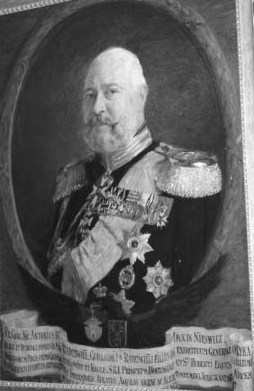
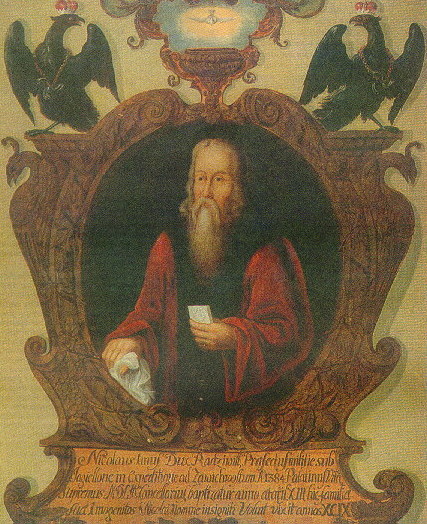
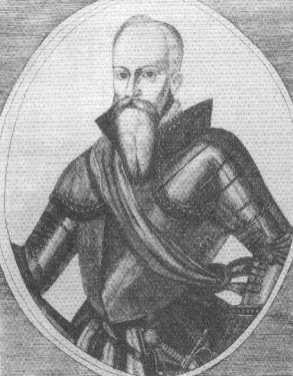
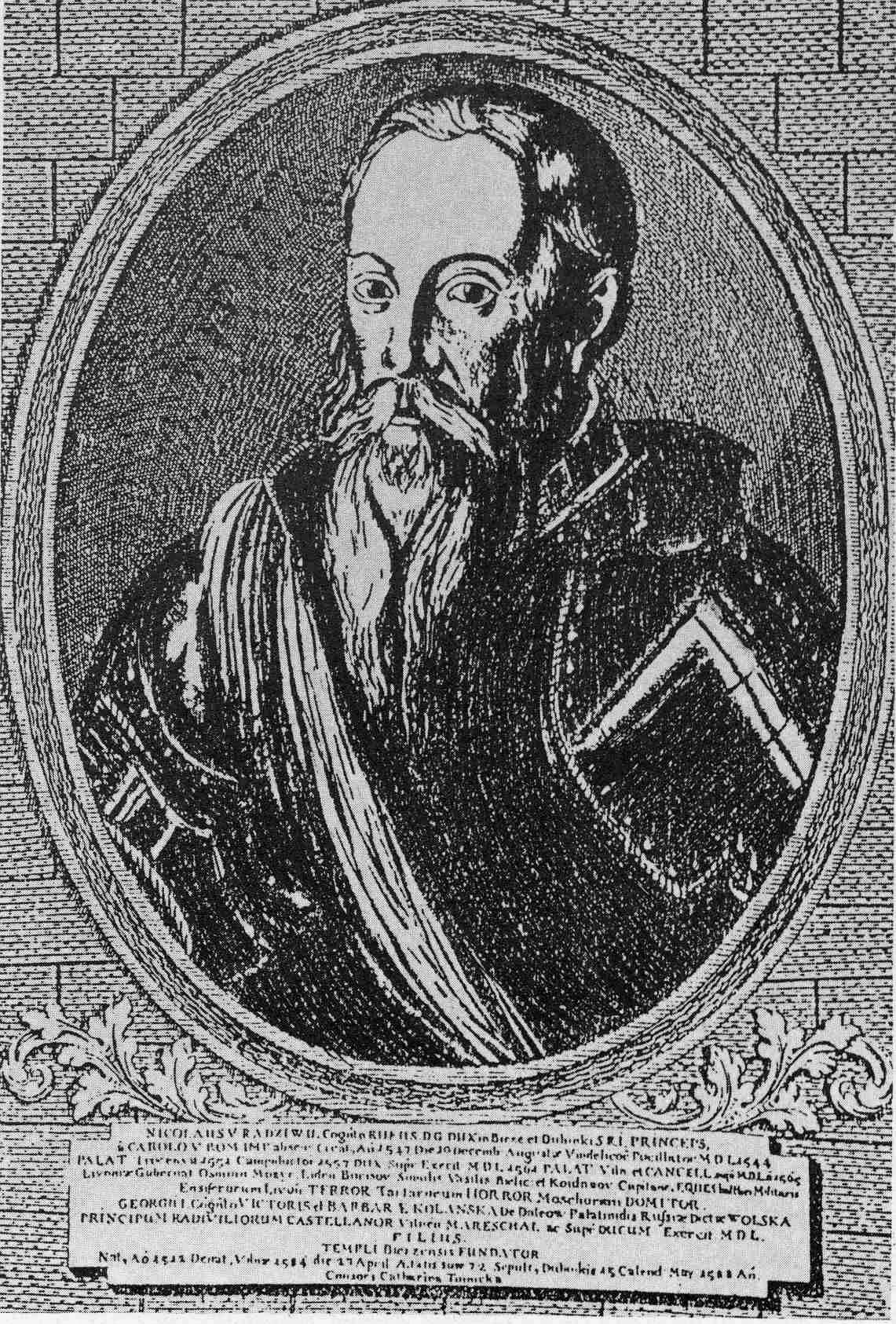
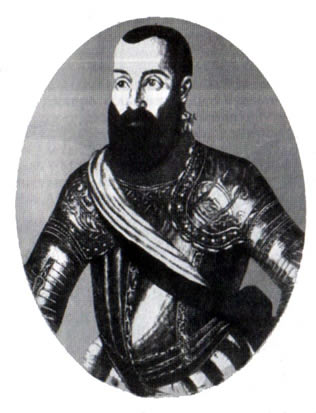
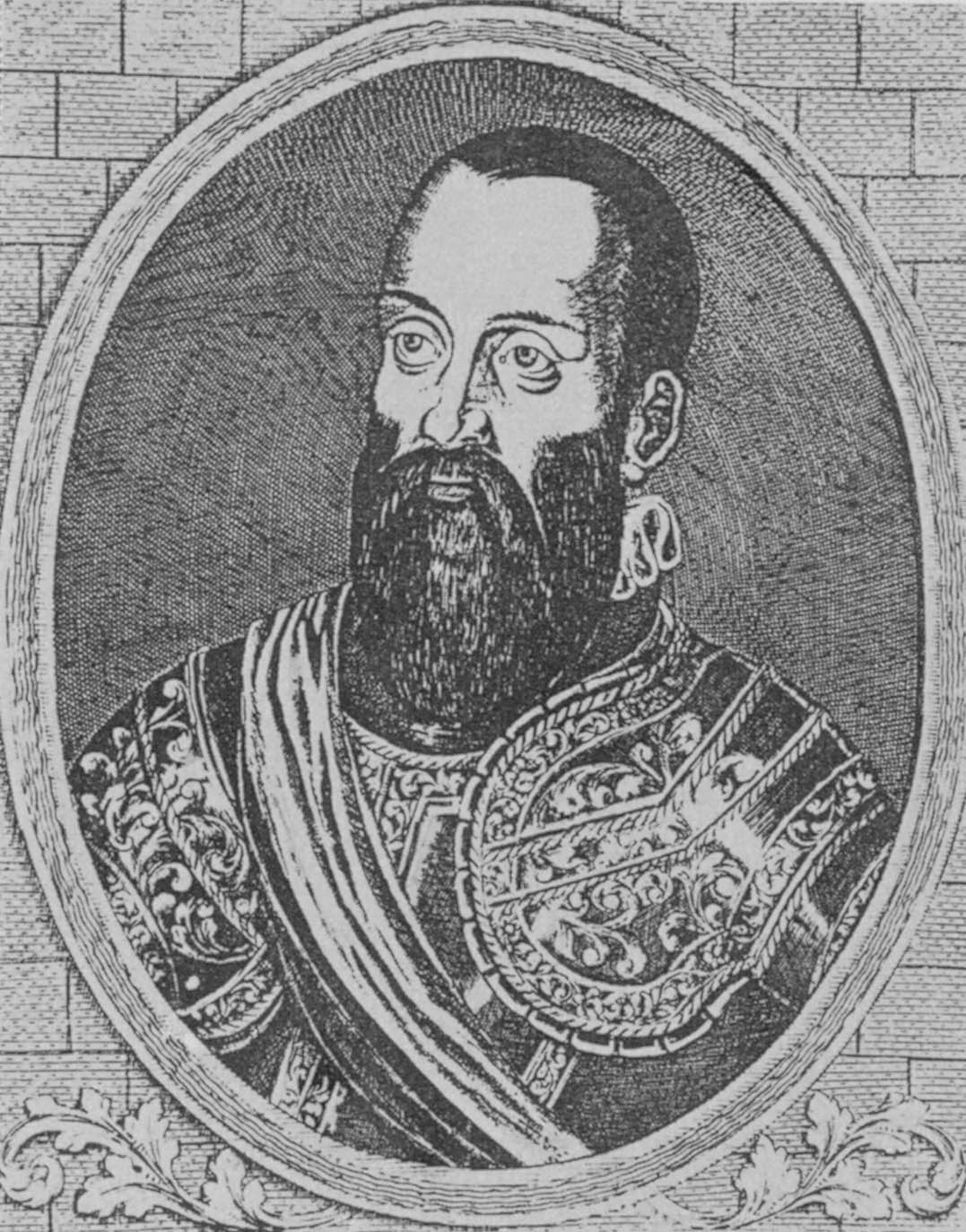
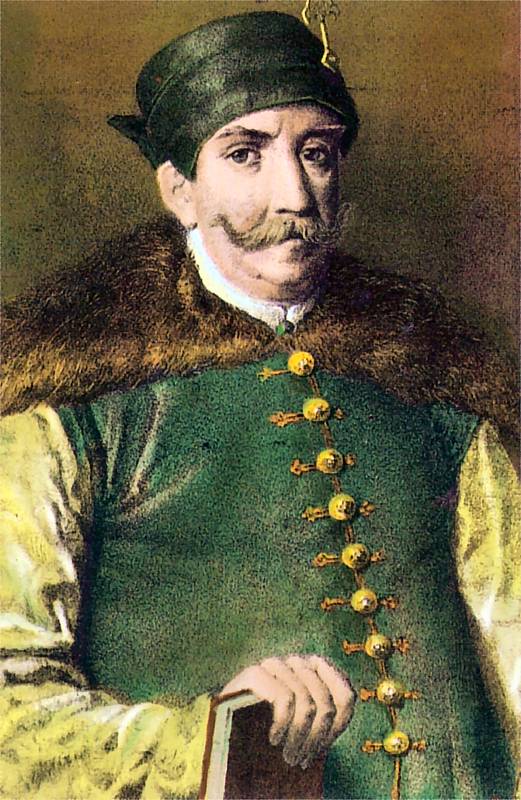
Mikołaj "Rudy - red"
Radziwiłł
(1512-1584)
Palatine of
Vilna, Great Chancellor and Great Hetman of Lithuania, Prince of Holy Roman
Empire.
Palatine of
Wilno,
Grand
Chancellor and Grand Lithuanian
Hetman (from 1576) in the
Grand Duchy of Lithuania and later in
Polish-Lithuanian Commonwealth. Mikołaj
Radziwiłł spent many years as a military commander. While not
the most famous of Commonwealth hetmans, under king
Stefan Batory he was fairly successful in defending the
eastern boarders of the Commonwealth against the
Russian Empire. His
political career was marked by his alliance with his cousin
Mikolaj 'Black' Radziwiłł, with whom he opposed the other
notable Lithuanian families in the rivalry for the dominant
status in the Great Duchy. This alliance marked the formation of
a dynastic-like cooperation between Radziwiłłs and showed how
family interests could affect magnates relations with
Rzeczpospolita (the Commonwealth). He was one
of the most prominent converts and advocates of the
Protestant faith in Polish-Lithuanian Commonwealth and his
line of the family became devoted memebers and defenders of the
Polish Reformed Church untill its extinction. Mikołaj
Radziwiłł became an advocate of
Lithuanian independence and thus a vocal opponent of
political union with
Poland, (Union
of Lublin,
1569).
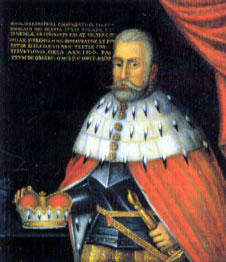
Mikolaj "Czarny - black"
Radziwiłł
, (1515-1565) Voivode
of Vilna, Lithuanian Grand Chancellor, Prince of the Holy Roman Empire. Major of
Bierascie (Brest), Kounia (Kaunus), and Barysau.
Mikołaj Czarny
was able to gain much political influence thanks to the romance
between his cousin
Barbara Radziwiłł and king
Zygmunt II August. This made him one of the most powerful
Royal advisers. Mikolaj became Marshal of Lithuania, Grand
Chancellor of Lithuania, as well as Palatine of Vilnius, gained
immense wealth and became the most powerful magnate in the
Commonwealth of that time. The new status
of the
Radziwiłł family was further strengthened when, during his
diplomatic mission to
Charles V and
Ferdinand I, a hereditary title of
Prince (SRI) was granted to him and his cousin Mikolaj the
Red. This was an extremely important title in the Commonwealth,
were all szlachta were supposed to be equal and majority of
titles popular in other countries, like
duke
or
baron were banned and none could be awarded by the
Commonwealth king. He formed an
alliance with his cousin
Mikołaj "the Red" Radziwiłł against other notable Lithuanian
families in the rivalry for the dominant status in the Great
Duchy of Lithuania. This alliance marked the formation of a
dynastic-like cooperation between Radziwiłłs and showed how
family interests could affect magnates relations with
Rzeczpospolita (the Commonwealth). Both Radziwiłłs backed
the cause of Lithuania independence.
Coincidentally, despite opposing close ties with Poland, he was
the chief negotatiator in the successful negotiation between
Grand Duchy of Lithuania and the state controlled by the
Order of the Brethren of the Sword, which led to the
secularisation of
Livonia and its union with
Grand Duchy of Lithuania in 1562. Mikołaj also
greatly furthered the poloniasation of other Lithuanian nobles
by adopting Polish culture - it's fashion, customs and language. He was known
for his religious beliefs, as he was one of the most prominent
converts and advocates of the
Protestant faith in
Grand Duchy of Lithuania and thus contributed to the
Lithuanian branch of the
Polish Reformed Church. He provided financial support for
the printing of the first Polish
translation of the
Bible
in 1563, colporated works written in defense of the
Reformed faith, financed a magnificent church and college at
Vilnius, supported learned Protestants, and in various other
ways fostered the
Calvinist faith. He is known to have exchanged letters with
John Calvin. Because
Protestants supported usage of mothers language, he's also
believed to fund Lithuanian churches and schools. With the
exception of his daughter Anna, all his children converted to
Roman Catholicism and became ardent supporters of the
Counter Reformation.
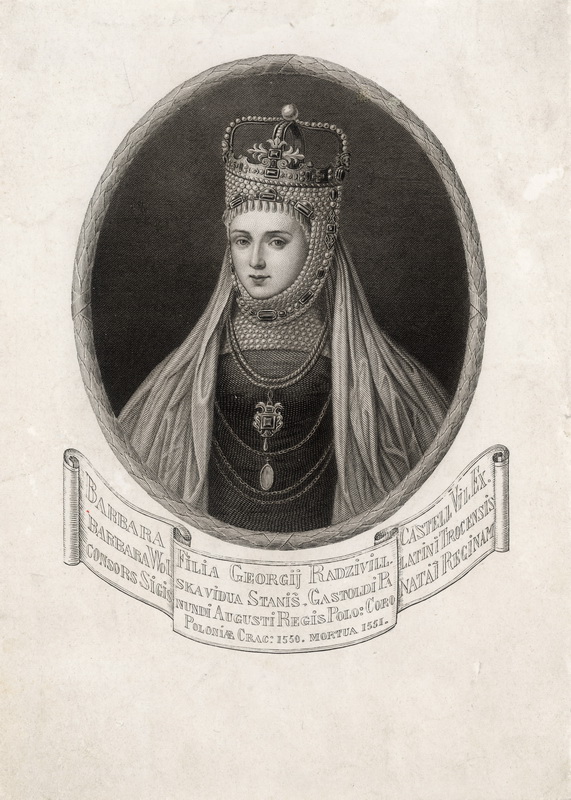
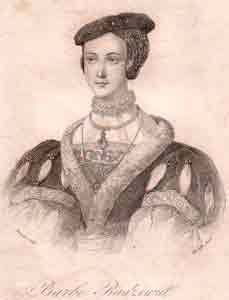
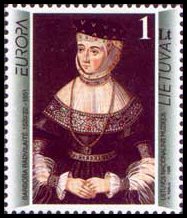
Barbara Radziwiłł (1520-1551)
Queen of Poland
and Grand Dutchess of Lithuania. Wife of King Sigismund Augustus.
According to
the writings of her contemporaries, Barbara was one of the most
beautiful women in Europe. Her parents had educated her well,
and she spoke Lithuanian and Polish, was able to write in both
languages, and most likely in Latin as well. She was
married on
May
18,
1537, to
Stanislaus Gasztold,
Palatin of
Trakai, who died on
December 18,
1542. Her
romance and later marriage in
1547,
in
Vilnius, to King
Sigismund II August, the last king of the
Jagiellonian dynasty, greatly increased the power of
Radziwiłł family in Poland and Lithuania, as can be seen by
the rise to power of
Mikołaj "the Black" Radziwiłł and
Mikołaj "the Red" Radziwiłł. There was
substantial opposition towards her marriage to the King from
many
Szlachta-nobles,
as the marriage was carried out without regard to the laws
governing Royal marriages. It was pursued by the King, who
seemed to have disregarded the political liabilities and
consequences and to be truly in love with Barbara. A
divorce was demanded by the
Sejm,
and many political games took place around the issue of this
marriage, and were further inflamed by the machinations of the
King's mother
Bona Sforza. This resulted in conflicts between the King and
many
magnates. A deadlock lasting two years, ensued. The
opposition finally acquiesced, and Barbara was crowned Queen, on
December 7,
1550. She died on
May 8,
1551,
in
Kraków, five months after her coronation. Her death was a
severe loss to the King and there was an unproven suspicion that
she had been
poisoned by the
Queen Mother, Bona. It was her wish to be buried in
Lithuania, and a funeral cortege took her body to
Vilnius. Her crypt is in the
Cathedral of Vilnius
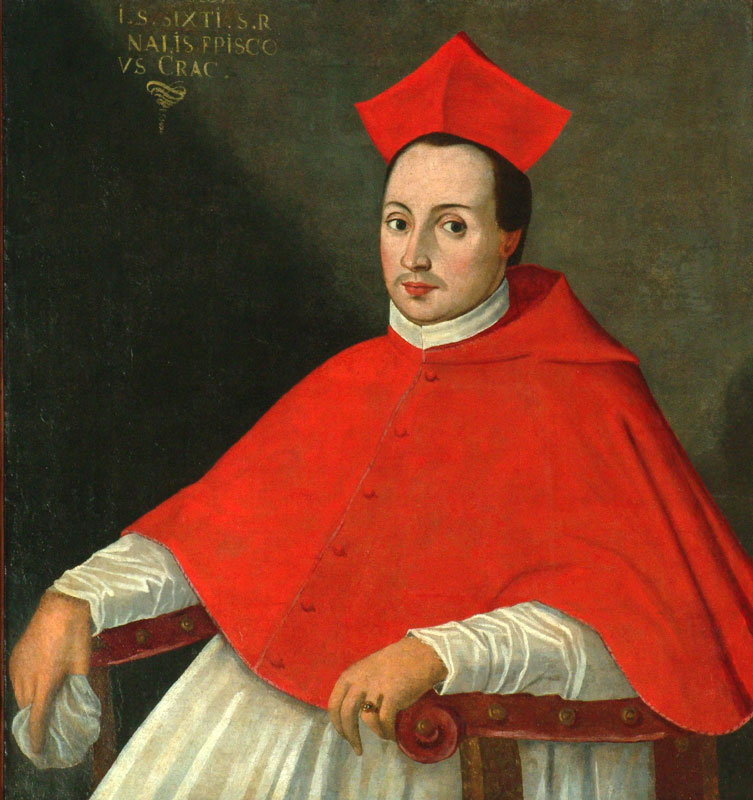
Krzysztof "Piorun - Lightning bolt"
Radziwiłł
(1547-1603)
Palatine of
Vilna, Great Hetman of Lithuania.
He was
Podczaszy of Lithuania since
1569,
Field Lithuanian
Hetman since
1572,
castellan of
Troki,
Deputy Chancellor of Lithuania since
1579,
voivode of
Wilno Voivodship since
1584,
Great Lithuanian Hetman since
1589,
Starost kokenhauski, solecki, żyżmorski, urzędowski, aiński,
borysowski and nowomyski. Krzysztof
Mikołaj Radziwiłł was one of the most talented commanders in the
service of Rzeczpospolita during the wars against
Muscovy and
Sweden. His achievements combined with his powerful
Radziwiłł family backing helped him rise to his various
voivode and starost offices and further increased his family
wealth. Like his
father, brother and nephew he was an ardent
Calvinist and defender of the
Polish Reformed Church from mounting Counter Reformation.
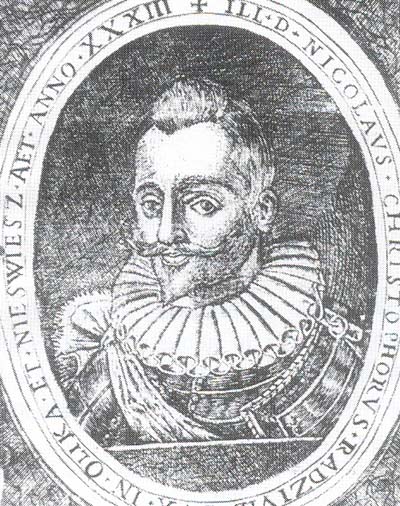
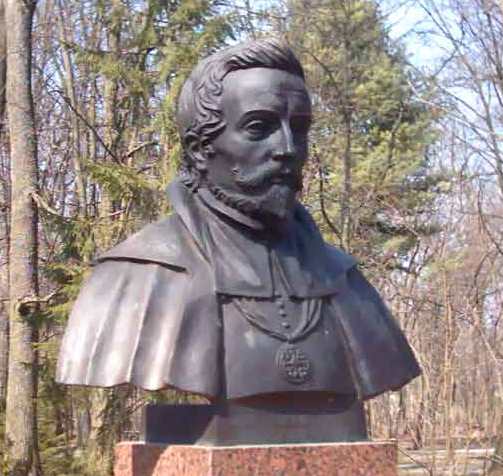
Mikolaj/nikolaus
Viii Krzysztof "Sierotka - little orphan"
Radziwiłł
(1549-1616)Devout
Catholic pilgrim to Jerusalem, Viovode of Vilna, first majorat (lord of
the manor) of Nesvish.
He made the order to burn books produced by Calvinist
printing houses.
Janusz vi
Radziwiłł
(1579-1620)
Castellan of
Vilna.
Podczaszy of Lithuania since
1599,
Castellan of
Vilnius since
1619
and
Starost of
Borysów. He held the title of Imperial Prince of the
Holy Roman Empire. Janusz expanded
the already immense family fortune through his first marriage to
Zofia Olelkowicz Słucka on
1 October
1600,
who, at her deathbed in 1612, left him a huge estate, including
seven
castles and
palaces and some thirty-two
villages. His second marriage was to Elisabeth Sofie of
Brandenburg, daughter of
John George, Elector of Brandenburg on
27 March
1613
in
Berlin. It was
during Janusz's life that the interests between the
Radziwiłł family and the state (Polish-Lithuanian
Commonwealth, or
Rzeczpospolita) began to drift apart, as Radziwiłłs seeked
to increase their wealth and power, disregarding the
public good and putting their dynastic interests over
interests of the state. Just like
his father, Janusz took part in a military campaign against
Swedes in
Livonia. Unhappy with the lack of material rewards in
appreciation of his skillful involvement in that campaign,
however, he voiced his opposition against King
Sigismund III Vasa by joining in 1606
Zebrzydowski Rokosz and becoming one of its leaders. This
confederatio, an armed and legal rebellion, was aimed at
stopping the king's plans of strengthening his dynasty and
powers by introducing the
hereditary monarchy, collecting additional taxes, and
creating a larger standing army. Janusz
Radziwłł is one of the personas on the famous painting by
Jan Matejko: the sermons of
Piotr Skarga.
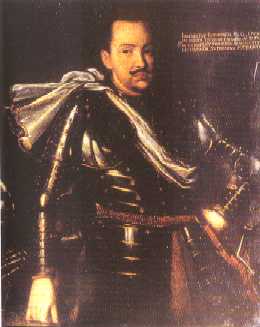
Krzysztof
ii Radziwiłł (1585-1640)
Great Hetman of
Lithuania.
Owner of
Birże,
Field Hetman of Lithuania since
1615,
Castellan of
Wilno
(modern Vilnius) since
1633,
Voivode of
Wilno Voivodship since
1633,
Great Lithuanian
Hetman since
1635,
starost of
Mohylów,
Bystrzyca,
Żyżmory and Seje. In 1632 he served as the Speaker of the
Sejm.
He took part in the campaign against the Swedes in Baltic
countries in 1621-1622 (Polish-Swedish
War), where he agreed to a truce. Important commander of
Lithuanian forces during the
Smolensk War, where he was instrumental in obtaining the
capitulation of the Russian army, also successfully fought in
Inflanty against Sweden until 1635. Afterwards he retired
from his military career, concentrating on administering his
estates. Calvinist, great protector of Protestants in Lithuania. Opponent of
Catholic king
Sigismund III Vasa, but supporter of his more tolerant son,
Władysław IV Waza. Advocate of Władysław's marriage to
protestant princess, but after Władysław declined this marriage
proposal he distanced himself from the king. Opponent of
alliance between the Commonwealth and the
Habsburgs. On his lands in
Kiejdany he set up a
Calvinist cultural and religious centre, which florished
till the 19th century as a center of the
Polish Reformed Church. His giant
horse stables were famous throughout Europe.
Albrycht
iv Stanisław Radziwiłł (1593/95-1656)
Great
Chancellor of Lithuania ("Intimate of three kings").
Supporter of king
Sigismund III Vasa, he often stood in
opposition to his son and successor,
Wladyslaw IV Waza on the matters of religion.
Władysław was lenient towards protestants and
encouraged
religious tolerance, while Albrycht was an
outspoken opponent of all non-Catholics,
sometimes even refusing to stamp documents with
his Chancellor's seal granting them rights and
priviliges. He was also a patriot of Grand Duchy:
he always strived to ensure that there is no
discrimnation towards his compatriots and they
have equal representation in the Commonwealth
political structure, just as he tried to ensure
that non-Catholics had as little of it as
possible. In his opposition to 'heretics'
he was supported by Chancellor
Jerzy Ossoliński. He sympathised with the
Habsburg faction and supported Queen
Cecylia Renata, Habsburg wife of Władysław.
Just like other Radziwills, he was famous for
the support given to his relatives: he did not
fail to watch over the interests of his
Calvinist cousins, despite being renown for
his opposition to the 'heretics'.
Despite being one of the most powerful
magnates in the
Polish-Lithuanian Commonwealth, both of his
marriages (with Regina von Eisenreich in 1619,
court lady of Queen Constance and after her
death in 1637 with Anna Krystyna Działyńska (z
Lubomirskich) in 1638) were childless.
During later stages of his life, Radziwiłł wrote
a
diary
Pamiętnik o dziejach w Polsce (Memoir
or Diary of the history of Poland)
covering the
1632-1656
period. This book is perhaps his most famous
legacy.
He died childless on
November 12, 1656. His estates were
inherited by Ordynat of Nieśwież line of
Radziwill family.
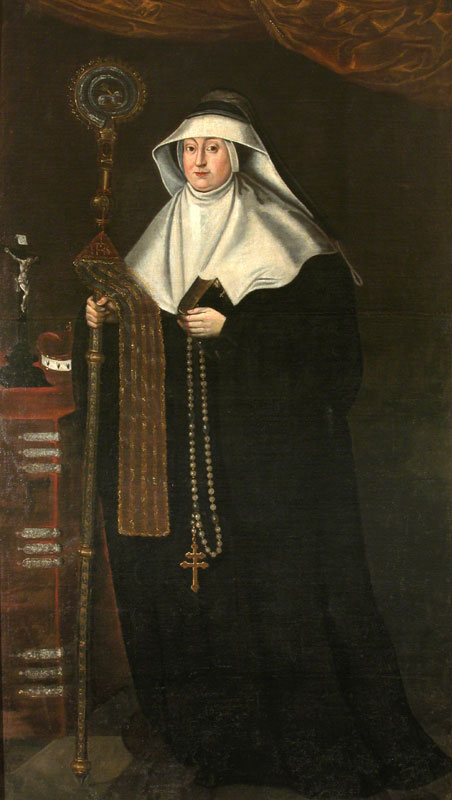
ANNA KRYSTYNA Radziwiłł (1598-1657)
Janusz
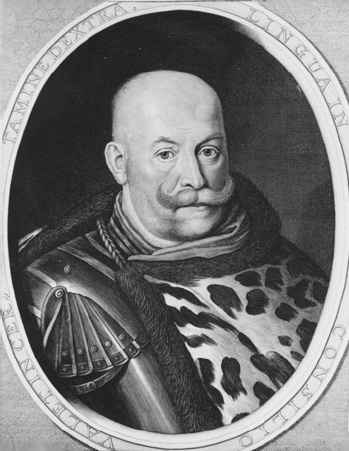
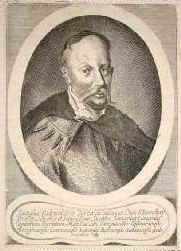
"the traitor" Radziwiłł (1612-1655)
Lithuanian
Field Hetman (1647-1654); Lithuanian Field Hetman (1647-1654), Great Hetman of
Lithuania (1654-1655), and Voivode of Vilna.
Court Chamberlain of Lithuania since
1633,
Field Lithuanian
Hetman and
starost żmudzki since
1646,
voivode of
Vilnius Voivodship since
1653,
Great Hetman of Lithuania since
1654,
Starost kamienicki, kazimierski and sejwejski. Educated abroad,
in Germany and Netherlands. Took part in the
Smolensk War in 1633. Calvinist, but married to a Catholic
(first wife, Katarzyna) in 1638. In 1645 he married
Maria Lupul, daughter of a
Moldavian
hospodar. He was a protector of the Protestant religion in
Lithuania, sponsor of many Protestant schools and churches. For several
decades, the interests between
Radziwłł family and the state (Polish-Lithuanian
Commonwealth) had begun to drift apart, as the Radziwłł were
less and less satisfied with the
magnatial status of the family and its immense wealth and
began craving for more political power. This culminated in the
doings of Janusz Radziwiłł, who is remembered in
Polish-Lithuanian history as one of the nobles responsible for
the end of the
Golden Age of the Commonwealth.
His vanity and ambitions appeared early in his
career. Upon marching into
Kyiv in
1651, he ordered the production of a
commemorative
medal on which he compared his victory to
the taking of Kyiv by the first Polish king,
Bolesław Chrobry, some six hundred years
earlier.
Janusz used his political influence against King
Jan Kazimierz Vasa in order to secure the
voivode, hetman and other offices. In
1652 he paralysed the central government by
evoking a
Liberum veto, a procedure whereby any single
member of the
Sejm (Commonwealth Parliament) could
completely halt and annul its proceedings by the
simple expression of dissent, saying 'Veto'.
In
1654, during the Swedish invasion of Poland,
known as
The Deluge, together with his cousin
Bogusław Radziwiłł, he began
negotiations with Swedish king
Charles X Gustav of Sweden, aimed at
breaking the Commonwealth and the
Polish-Lithuanian union. They signed a
treaty according to which was founded
Swedish-Lithuanian union.
Many Polish nobles (szlachta),
as
Deputy Chancellor of the Crown
Hieronim Radziejowski and
Grand Treasurer of the Crown
Bogusław Leszczyński, thinking that
Jan II Kazimierz was a weak King, or a
Jesuit-King, or for any other reasons,
encouraged Charles Gustav to claim the Polish
Crown.
Jan Kazimirerz had few friends among the Polish
szlachta, as he openly sympathized with
Austria and showed disregard and contempt
for
Polish culture (Sarmatism).
Poznań
Voivod
Krzysztof Opaliński surrendered
Great Poland to him, and quickly, the others
voievodies surrendered also. Almost the hold
Country did this, before the
Jasna Góra resistance and the
Tyszowce Confederation.
The Swedish defeat and eventuall retreat from
the territories of the Commonwealth abruptly
ended the plans of Janusz and Bogusław. Janusz
died in
Tykocin,
besieged by the loyal Commonwealth forces (desperate
Swedish defenders later blew themselves up).
Their lines of the Radziwiłl family became
extinct by the next generation, and their only
lasting achievement was to tarnish the Radziwiłł
family name for years to come, their treason
eclipsing the deeds of other Radziwiłłs like
Michał Kazimierz Radziwiłł, who fought for
the Crown and the Commonwealth against the
Swedes.
Boguslaw
Radziwiłł
(1620-1669)
Owner of
Biržai,
Dubingiai,
Slutsk and
Kopyta. Great
Standardbearer of Lithuania since
1638,
Master of the Stables of Lithuania since
1648,
Starost barski. Governor of
Prussia (generalny gubernator Prus Królewskich) since
1657.
He held the title of Imperial Prince of the
Holy Roman Empire. From 1637 to
1648 studied abroad, in Germany, Netherlands, England and France. Since
several decades, the interests between
Radziwiłł family and the state (Polish-Lithuanian
Commonwealth) begun to drift apart, as Radziwłł were less
and less satisfied with the
magnatial status of the family and its immense wealth and
began craving for more political power. In
1654,
during the Swedish invasion of Poland, known as
The Deluge, together with his cousin
Janusz Radziwiłł, he began negotiations with Swedish king
Charles X Gustav of Sweden, aimed at breaking the
Commonwealth and the
Polish-Lithuanian union. They signed a treaty according to
which was founded
Swedish-Lithuanian union and Radziwiłłs were to rule over
two Duchies carved up from the lands of the
Grand Duchy of Lithuania. The Swedish
defeat and eventual retreat from the territories of the
Commonwealth abruptly ended the plans of Janusz and Bogusław.
The earlier died in a
Tykocin castle besieged by forces loyal to the Commonwealth,
while Bogusław retreated with his forces to
Prussia, where he supported
Friedrich Wilhelm against the Polish King. In the
Battle of Prostki (October
8,
1656), Bogusław's forces were decimated by the Commonwealth
forces under
hetman
Wincenty Korwin Gosiewski. Bogusław Radziwiłł himself was
captured by the
Tatars who initially enslaved him and wanted to transport
him to
Crimea. After fierce discussions with the Tatar commanders,
he was handed over to Gosiewski. Both
Bogusław's and Janusz's lines of the Radziwiłl family became
extinct by the next generation, and their only lasting
achievement was to tarnish the Radziwiłł family name for years
to come, their treason eclipsing the deeds of other Radziwiłłs
like
Michał Kazimierz Radziwiłł, who fought for the Crown and the
Commonwealth against the Swedes. Bogusław
died in exile in
Königsberg, the last Calvinist male member of his family.
His estates and the task to protect the
Polish Reformed Church passed to his only daughter.
Michał Kazimierz Radziwiłł (1625-1680)
Great
Chancellor and Field Hetman.
Anton Heinrich (Antoni Henryk) Radziwiłł (1775-1833)
Stadholder of the Grand Duchy of Posnan, composer.
Prince
Antoni Henryk Radziwiłł, Duke of
Nieśwież (today in
Belarus) and
Olyka
(Ołyka) (today in the
Ukraine), (1775-1833)
was a
Polish-Lithuanian
aristocrat, musician, politician and the Duke-Governor (pol.książę-namiestnik,
ger.Statthalter) of
Grand Duchy of Poznań. Antoni
Radziwiłł was born on
June 13,
1775
in
Vilna to Michał Hieronim Radziwiłł and Helena nee
Przeździecka. In
1796
he married Princess Louise of Prussia, a niece of king of
Prussia
Frederick the Great. His new family convinced him that he
should be a mediator between the Poles under
Partitions and the
Prussian authorities in Berlin. During
Napoleon's campaign in Poland in
1806
he tried to incite a Polish uprising against the French army and
tried to convince Prince
Józef Poniatowski to abandon his French allies and join the
cause of
Russia and
Prussia. He failed on both occasions. In
1815
he was sent to
Poznań as the Duke-Governor of
Grand Duchy of Poznań. Struggling between his Polish
subjects and the Prussian authorities, Radziwiłł found himself
with little power. He unsuccessfully tried to oppose the
Germanisation campaign started by the Prussians. Shortly
after the outbreak of the
November Uprising he was deprived of all the powers, the
Grand Duchy was abolished and its autonomy was cancelled. It was
directly incorporated into
Prussia and renamed
Province of Posen. Antoni Henryk Radziwiłł returned to his
palace in Berlin, where he died on
April 7,
1833.
He was buried in the
Poznań Cathedral. His children with Louise were germanised
and never returned to
Poznań, however, as owners of the manor
Nieborów near Warsaw and huge family estates in today's
Belarus they paid frequent visits to other parts of Poland. Antoni
Radziwiłł is better known for his art patronage than for his
ill-fated political career. His palaces in Berlin (later
Bismarck's and
Hitler's Chancellery of the
Reich),
Poznań and
Antonin near
Ostrów Wielkopolski were known for great concerts performed
by one of the most notable musicians of his times. Apart from
the guitar, cello and opera concertos performed by Radziwiłł
himself, among his guests were
Niccolò Paganini (concert in Poznań on
May
19,
1829),
Johann Wolfgang von Goethe,
Frédéric Chopin and
Ludwig van Beethoven. Chopin wrote his Introduction
and Polonaise Op. 3 for cello and piano especially for
Radziwiłł. He also performed a concert in his palace in Poznań
on
October 2,
1828.
Ludwig van Beethoven dedicated his Ouverture Op. 115 (Zur
Namensfeier) to him, while Goethe participated in his
efforts to write the music for his
Faust.
He was also a notable sponsor of Polish theatres and his wife
opened the first public school for girls in Poznań in
1830. Awarded on
September 6,
1793
with the
Order of the White Eagle and on
December 1,
1815
with the
Order of the Black Eagle, Prussia's highest decoration.
Elisa Radziwiłł (1803-1834)
Youthful
love of Kaiser Wilhelm I.
Friedrich Wilhelm Ferdinand Anton (Teplitz 31 Jul 1833-Berlin 16 Dec
1904)
Adjustant General to William I and Friedrich III of
Prussia; Duke of
Nieśwież (today in
Belarus) and
Olyka
(Ołyka).
.jpg)


.jpg)

_2.jpg)
.jpg)
.jpg)
.jpg)

.jpg)
.jpg/250px-Hieronim_Wincenty_Radziwill_(1759-1786).jpg)